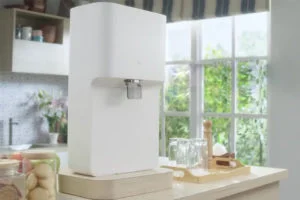
The best water filter in NZ overall is the Devanti 24L Benchtop Gravity Water Filter, thanks to its large no-plumbing reservoir and multi-stage cartridge that strips chlorine taste from ordinary tap water. New Zealand mains water is treated and safe to drink, but plenty of households still want to lose the chlorine smell, catch sediment from older pipes, or set up drinkable water for a bach, boat or campsite.
This guide compares five water filters available in New Zealand right now, from gravity benchtop tanks to filtered hot and cold dispensers, so shoppers can match capacity and filtration to the way they actually drink.
Quick comparison
| Water filter | Best for | Type | Capacity | Filtration |
|---|---|---|---|---|
| Devanti 24L Benchtop Gravity Water Filter | Best overall | Gravity, no power | 24L | 7-stage |
| Devanti 14L Benchtop Gravity Water Filter | Smaller kitchens | Gravity, no power | 14L | 8-stage |
| Devanti 22L Bench Top Water Cooler | Chilled and hot water | Powered dispenser | 22L | 7-stage |
| Devanti 22L Countertop Water Dispenser | Three temperatures | Powered dispenser | 22L | 7-stage |
| 8 Stage Water Filter | Best budget buy | Gravity, no power | 16L | 8-stage |
How we chose
Each pick was checked on its live New Zealand product listing to confirm availability and specifications, then cross-referenced against retailer listings and owner feedback for the same Devanti units sold across Australasia. Picks are ordered by how well they suit most shoppers, and every entry lists honest trade-offs as well as strengths. No product was included on price alone.
1. Devanti Benchtop Gravity Water Filter – Best Overall
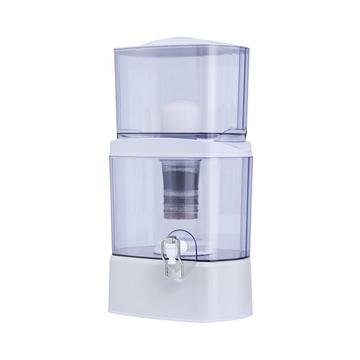
The best water filter in NZ for most homes is the Devanti 24L gravity unit, a countertop tank that filters tap or collected water with no power and no plumbing. It is the pick to beat for households that get through a lot of water.
It is a two-chamber gravity tower. The footprint is 35cm long and 31cm wide, and it stands 63cm tall, so it wants a little headroom under a wall cupboard. Raw water goes in the top chamber and gravity pulls it down through the cartridge into the 24L holding tank with its own tap. The white food-grade plastic and simple spigot look utilitarian rather than designer, but tidy enough for a staff room or a corner of the bench.
The body is BPA-free, food-grade PP and AS plastic, light when empty and steady once filled. Owners flag one consistent quirk: a brand-new cartridge needs priming, so the first fill or two runs slowly and should be tipped out while the carbon and ceramic settle and the initial cloudy water clears. After that the flow speeds up. Because it is 63cm tall, filling the top chamber from a low tap can be awkward.
With 24L on hand it holds the most water here, which suits large families or a few days off-grid between refills. The multi-stage media targets sediment, chlorine taste and odour rather than making any medical claim.
Pros: largest 24L capacity here; runs with no power or plumbing; BPA-free food-grade build; noticeable drop in chlorine taste.
- Largest 24L reservoir in this list
- No electricity or plumbing needed, so it works at a bach or campsite
Cons: tall and fiddly to fill; slow to prime from new; no chilling or heating.
- 63cm height makes filling from a low tap awkward
- Gravity flow is slower than a plumbed filter
Key specs: Model BWF-7SF-24L-WH; 24L capacity; 7-stage gravity filtration; food-grade PP/AS, BPA-free; 35 x 31 x 63cm; 1-year warranty.
2. Devanti Benchtop Gravity Water Filter – Best for Smaller Kitchens
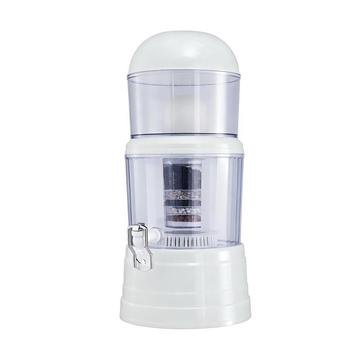
For couples and smaller households, the Devanti 14L gravity filter delivers the same no-plumbing filtering in a narrower body that is easier to live with on a tight bench.
The footprint is 27cm wide, the slimmest here, by 33cm deep, and it stands 59cm tall. That 27cm width slips into gaps the 24L cannot. It uses the same white food-grade plastic and front spigot, so it looks identical bar the size.
Construction is the familiar BPA-free PP and AS plastic. The priming routine is the same as the larger model, but the smaller top chamber is lighter and easier to lift and fill. One point in its favour: this model carries an 8-stage cartridge, one more stage than its bigger 24L sibling.
The 14L holding tank is plenty for a couple or a small family, though heavy drinkers will refill it more often than the 24L. For anyone short on bench space, that is a fair trade.
Pros: narrowest 27cm footprint; 8-stage cartridge; no power or plumbing; lighter top chamber to fill.
- Slim 27cm width suits tight benches
- Extra filtration stage over the 24L model
Cons: 14L means more frequent refills; still 59cm tall; plain plastic finish.
- Smaller reservoir tops up more often
- Height still needs cupboard clearance
Key specs: Model BWF-8SF-14L-WH; 14L capacity; 8-stage gravity filtration; food-grade PP/AS, BPA-free; 27 x 33 x 59cm; 1-year warranty.
3. Devanti Bench Top Water Cooler – Best for Chilled and Hot Water
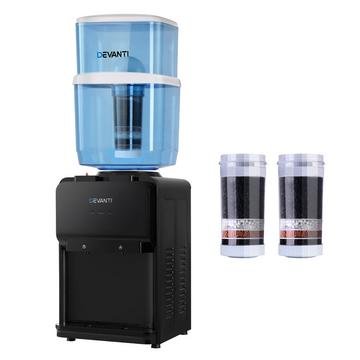
Shoppers who want genuinely cold and near-boiling filtered water should look at the Devanti 22L bench-top cooler, which pairs a 7-stage filter container with proper compressor cooling.
It is a compact top-loading cooler measuring 26 x 28 x 41cm, fed by a 22L filter container that sits on top. Two taps handle hot and cold. The black plastic body with stainless steel elements reads more like a small office cooler than the plain gravity towers, which some buyers will prefer on a modern bench.
Build is plastic and stainless steel, running on 220-240V mains. In use, the container fills from the top, and hot and cold can each be switched off independently. Because it uses a compressor rather than thermoelectric cooling, it genuinely gets water cold, and owners of these Devanti coolers tend to single out the hot-water convenience.
The hot tank holds 0.8L and heats around 5L per hour to between 80 and 95C. The cold tank holds 2.8L and cools about 2L per hour down to 7C. That 7C figure is fridge-cold, and it is the reason this model wins on chilled water.
Pros: compressor cooling down to 7C; near-boiling hot tap; 7-stage filtration; independent hot and cold switches.
- Only unit here that reaches true fridge-cold 7C
- Hot tap saves boiling the kettle for tea
Cons: needs mains power; compressor hums periodically; larger and heavier than a jug.
- Must sit near a power socket
- Compressor noise comes and goes
Key specs: Model WD-COM-BT533-22BP-2FT-BK; 22L container; 7-stage filtration; hot 80-95C, cold to 7C; cooler 26 x 28 x 41cm; 220-240V; 1-year warranty.
4. Devanti Countertop Water Dispenser – Best for Three Temperatures
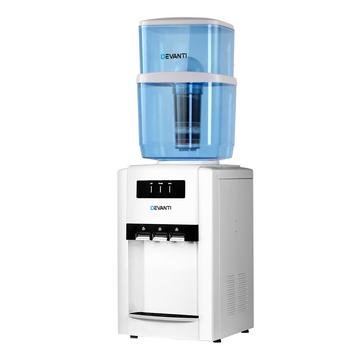
Families who want a room-temperature option alongside hot and cold will prefer the Devanti 22L three-tap dispenser, which lists its full filter media and ships with spare filter cloths.
This is a taller white unit: the dispenser measures 31 x 30.5 x 52cm and the separate filter container is 28 x 28 x 55cm. Three taps pour hot, cold and room-temperature water. It is more upright and bulkier than the pick above, so it needs more clear bench height.
Construction mixes metal and plastic, with a 163cm cable for 220-240V mains, and it comes with a bonus pack of four filter-cloth types. The 7-stage media is spelled out on the listing: activated carbon, red mineral balls, white mineral balls, ceramic and filter cloths. The maker warns to fill it with water before switching on to avoid damaging the elements.
The hot tank is a generous 1.1L, heating about 5L per hour to 80-95C. The catch is cooling. The cold tap only reaches 13 to 15C at roughly 1L per hour, so water comes out cool rather than cold. Buyers set on icy water should choose the compressor cooler above instead.
Pros: three temperatures including room temp; fully documented 7-stage media; bonus filter-cloth pack; large 1.1L hot tank.
- Room-temperature tap as well as hot and cold
- Clearly listed filter stages and spare cloths included
Cons: cooling is mild at 13-15C; tall, bulky footprint; must be pre-filled before powering on.
- Not truly cold like a compressor unit
- Takes more bench height than the cooler above
Key specs: Model WD-1103-22L-WH; 22L container; 7-stage filtration; hot 80-95C, cold 13-15C; dispenser 31 x 30.5 x 52cm; 220-240V; 1-year warranty.
5. 8 Stage Water Filter – Best Budget Buy
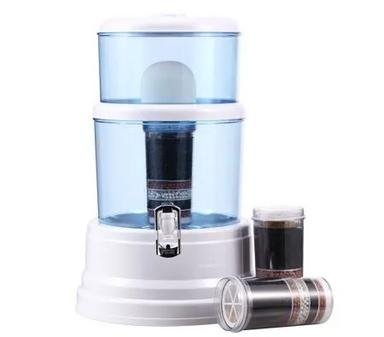
The best budget pick is the 8 Stage Water Filter from Best Deals, a 16L countertop gravity unit that bundles two spare cartridges to stretch the running cost further.
It follows the classic two-chamber countertop gravity shape, similar to the Devanti tanks, holding 16L, which lands neatly between the 14L and 24L models. The housing is white and clear food-grade plastic with a front spigot, so it looks the part on a bench without standing out.
The 8-stage cartridge stacks media such as activated carbon, ceramic and mineral stones. Like every gravity filter it needs flushing before first use, and the two bonus filters mean a longer stretch before buying replacements. The listing carries a large owner base, with 563 reviews recorded at the time of writing, which gives more feedback to lean on than most units here.
Across its stages it aims to cut chlorine taste and sediment, while the mineral stones add calcium and magnesium back for a smoother, slightly alkaline taste. That remineralising step is the main draw at this price.
Pros: lowest-cost entry point; two bonus filters included; remineralising 8-stage media; very large review count.
- Cheapest way into multi-stage filtering here
- Spare cartridges included in the box
Cons: mineral taste divides opinion; basic plastic build; slow gravity flow.
- Added minerals suit some palates and not others
- No heating or cooling
Key specs: 16L capacity; 8-stage gravity filtration with carbon, ceramic and mineral media; includes 2 spare filters; countertop, no power.
How to choose a water filter in New Zealand
Start with what you are actually removing. Mains water here is chlorinated and safe, so most buyers are chasing better taste rather than safety, and an activated-carbon stage is what cuts the chlorine smell.
Then decide on power. Gravity tanks (picks 1, 2 and 5) need no electricity and travel well to a bach, boat or campsite, while filtered dispensers (picks 3 and 4) plug in and add hot and cold on demand. If boiling water for tea is the main goal, a dedicated instant hot water dispenser or a fast electric kettle may suit better than a cooler.
Match capacity to bench space. A bigger tank means fewer refills but a taller unit, and several here stand 55 to 63cm high, so measure the gap under your cupboards first.
Do not assume more stages is automatically better. Look for activated carbon for chlorine and ceramic for sediment, and treat mineral-ball stages as a taste preference. Cleaner water also lifts the flavour from home coffee machines and other kitchen appliances.
Related guides: for a drier, healthier home over winter, see the guide to dehumidifiers.
If you are renovating rather than replacing one item, the guides to dishwashers, kitchen sinks and waste disposal units are worth reading next.
Verdict
For most New Zealand homes the Devanti 24L Benchtop Gravity Water Filter is the best all-round choice: the biggest reservoir here, no power or plumbing, and a clear drop in chlorine taste. Tight on bench space, step down to the 14L model. Want chilled and near-boiling water on tap, choose the 22L compressor cooler; want a room-temperature option too, the three-tap dispenser covers it. On a budget, the 8 Stage Water Filter bundles spare cartridges and adds minerals back for a smoother taste.
FAQs
Is tap water safe to drink in New Zealand?
Yes. Public water supplies in New Zealand are treated and chlorinated to national standards, so tap water is safe to drink straight from the tap in towns and cities. A filter is optional and mostly about improving taste, removing the chlorine smell, or catching sediment from older household pipes.
Do you really need a water filter in New Zealand?
No, a filter is not strictly necessary because mains water is already safe. People choose one when the water tastes strongly of chlorine, when old pipes add a metallic note, or when they want drinkable water off-grid at a bach or campsite. It is a taste and convenience choice, not a safety must-have.
Do water filters remove chlorine and fluoride?
Activated-carbon stages, used in every filter here, are very effective at reducing chlorine taste and odour. Fluoride is harder: standard carbon and ceramic media remove little of it, and a dedicated fluoride cartridge is needed for meaningful reduction. Check the listed media before buying if fluoride removal matters to you.
How often should you replace a water filter cartridge?
It depends on the media and how much water you use. As a rough guide, carbon and ceramic gravity cartridges are often changed every few months to a year, while mineral stones can last longer. Follow the maker’s schedule, and replace sooner if flow slows or the taste returns.
Do gravity water filters remove bacteria?
Good gravity filters with a ceramic stage can reduce bacteria, protozoa and cysts as well as sediment and chlorine, but exact performance varies by cartridge. Since New Zealand mains water is already disinfected, this matters most for rain, bore or stream water, where a certified ceramic element is worth seeking out.
What does an 8-stage water filter do?
An 8-stage filter passes water through several media in sequence, typically sediment mesh, activated carbon, ceramic and mineral stones. Carbon cuts chlorine taste, ceramic traps particles, and mineral stones add back calcium and magnesium for a smoother, slightly alkaline result. More stages mean more steps, not automatically cleaner water.
